Shopping Cart

Your cart is currently empty
Looks like you haven’t added anything to your cart yet.
← Return to Shop
Looks like you haven’t added anything to your cart yet.
← Return to Shop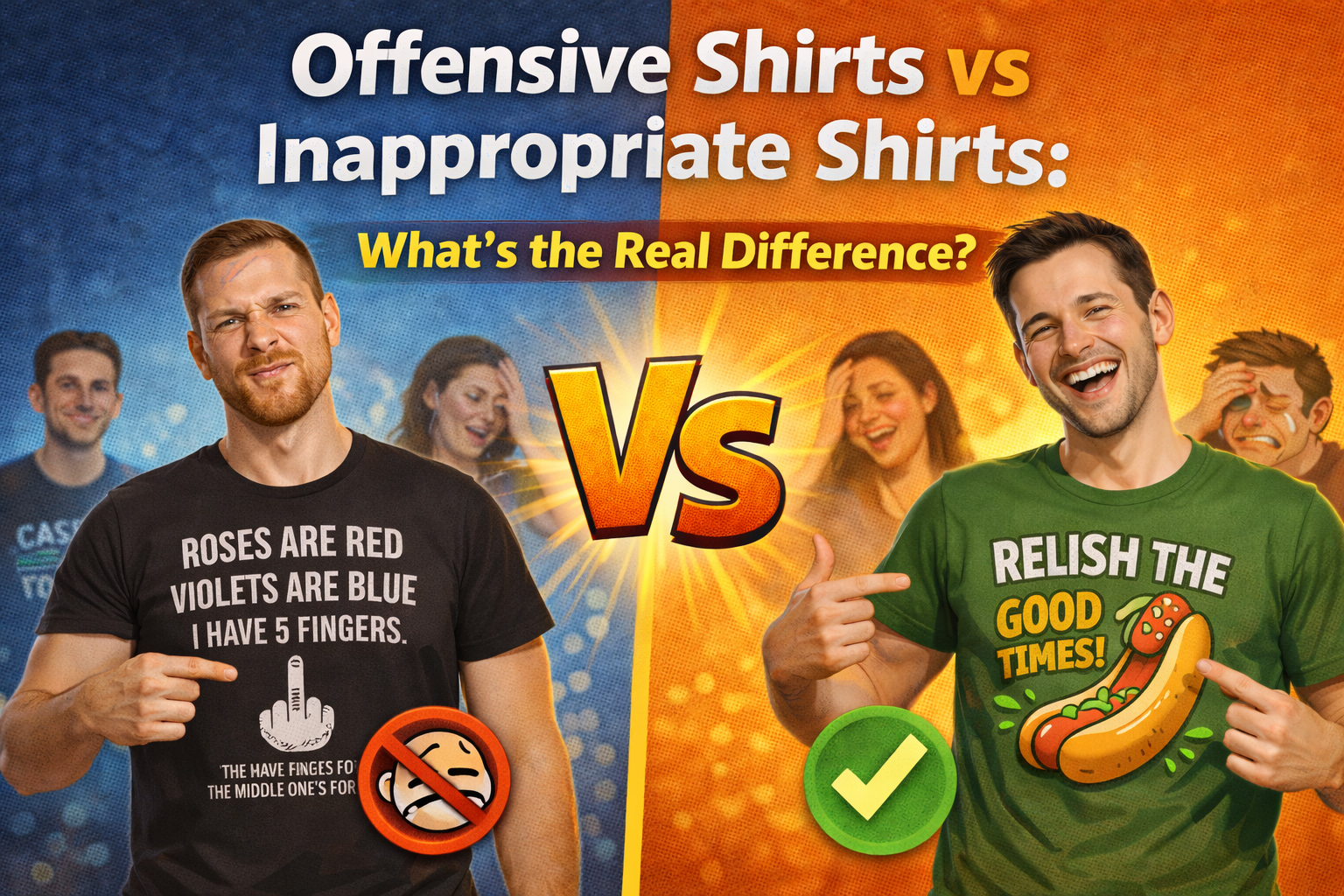
Offensive Shirts vs Inappropriate Shirts is a distinction many shoppers think they understand until they actually wear one in real life. Most of them don’t. And if you’ve ever bought a shirt that felt hilarious online but suddenly awkward in real life, you already know why this difference matters.
For women who love edgy humor but still want repeat wear (and fewer regrets), understanding offensive vs inappropriate shirts can save money, embarrassment, and closet space. This guide breaks down what each label actually means, how brands use them, and which option most shoppers end up choosing anyway.
If you already know you lean toward humor that pushes buttons without blowing things up, you can browse the Inappropriate Shirts Collection right away but read on first if you want to be sure you’re clicking “Add to Cart” for the right reasons.
At its core, the difference between Offensive Shirts vs Inappropriate Shirts isn’t about shock value, it’s about intent, impact, and how long the joke actually survives outside the screen. What feels edgy online can either spark laughter in real life or quietly turn into a regret purchase.
Most people don’t confuse these categories because they’re careless. They confuse them because brands intentionally blur the line.
Anything that isn’t clean, safe, or office-approved gets lumped into the same bucket. But in real life, the social consequences of wearing an “offensive” shirt versus an “inappropriate” one are wildly different.
The confusion usually comes from three places:
Once you separate intention from impact, the difference becomes obvious.
In real-world terms, an offensive shirt is one that targets or dismisses a group, belief, or identity in a way that feels hostile, demeaning, or aggressive.
Not “someone might clutch their pearls.”
More like “someone might confront you.”
Offense isn’t about sensitivity it’s about harmful intent or perceived hostility, whether that was the designer’s goal or not.
Offensive shirts often include:
These designs don’t rely on cleverness. They rely on provocation.
Some buyers want:
There’s nothing subtle about this category. The shirt wants conflict.
Inappropriate shirts break social norms, not moral ones.
They might reference:
The joke is usually about the situation, not a group of people.
Inappropriate humor works when:
A shirt can be inappropriate at brunch and hilarious at a bar context.
Because they’re:
They toe the line without crossing into social fallout.
If you just want the short answer: offensive shirts aim to provoke, while inappropriate shirts aim to amuse without collateral damage. The table below breaks down how that difference plays out in real life, not marketing copy.
Longevity matters more than most shoppers admit. Shirts that rely purely on offense tend to age badly the joke expires, the message feels heavier, and the shirt quietly stops leaving the closet.
Inappropriate shirts, when done right, survive changing moods, social settings, and even time itself. That’s why they show up again and again in repeat purchases, not just impulse buys.
That balance is exactly why many shoppers eventually gravitate toward curated inappropriate shirt collections; they offer humor that feels bold without locking you into a single moment, mood, or reaction.
Friends know your humor. Strangers don’t.
Inappropriate shirts survive that gap. Offensive ones usually don’t.
Crowds reward boldness but even there, shirts that feel clever outperform shirts that feel aggressive.
What’s funny in the moment becomes searchable later.
That matters more than people think.
If you want tips on pulling off edgy tees without looking like you’re trying too hard, check out How to Style Graphic Tees Without Looking Try-Hard for real-world styling advice.
This is where funny but still inappropriate designs live a sweet spot for many shoppers. See more examples in the Funny But Inappropriate Shirts Guide.
These shirts don’t age well.
Across graphic tee brands and long-term apparel trends, one pattern shows up consistently: designs labeled “inappropriate” outperform “offensive” designs in repeat wear and repeat purchases.
That’s not because shoppers suddenly became more polite, it’s because they became more selective about what kind of humor they want attached to their identity.
“Offensive” signals danger. Danger gets clicks.
But many so-called offensive shirts aren’t bold, they’re just lazy.
Brands use the label to:
For a deeper breakdown of what brands really mean by offensive shirts, see Offensive Shirts Explained.
Because it promises:
Shoppers trust it more and wear it more.
If any answer feels shaky, pause.
Most people aren’t trying to offend.
They’re trying to express humor, confidence, or attitude.
That’s why many end up browsing our inappropriate shirts collection instead because it matches real life better.
Inappropriate humor creates connection.
Offensive humor creates distance.
You can give inappropriate gifts.
You hesitate to give offense.
That alone explains sales patterns.
Understanding the difference between offensive and inappropriate shirts helps shoppers avoid regret purchases, choose humor that fits real life, and invest in graphic tees they’ll actually enjoy wearing more than once.
The real difference between offensive vs inappropriate shirts isn’t shock level, it’s intent and longevity.
Offensive shirts chase reactions.
Inappropriate shirts earn laughs.
If you want graphic tees that feel bold and wearable, push boundaries without crossing lines, and still feel good clicking “Add to Cart,” inappropriate almost always wins.